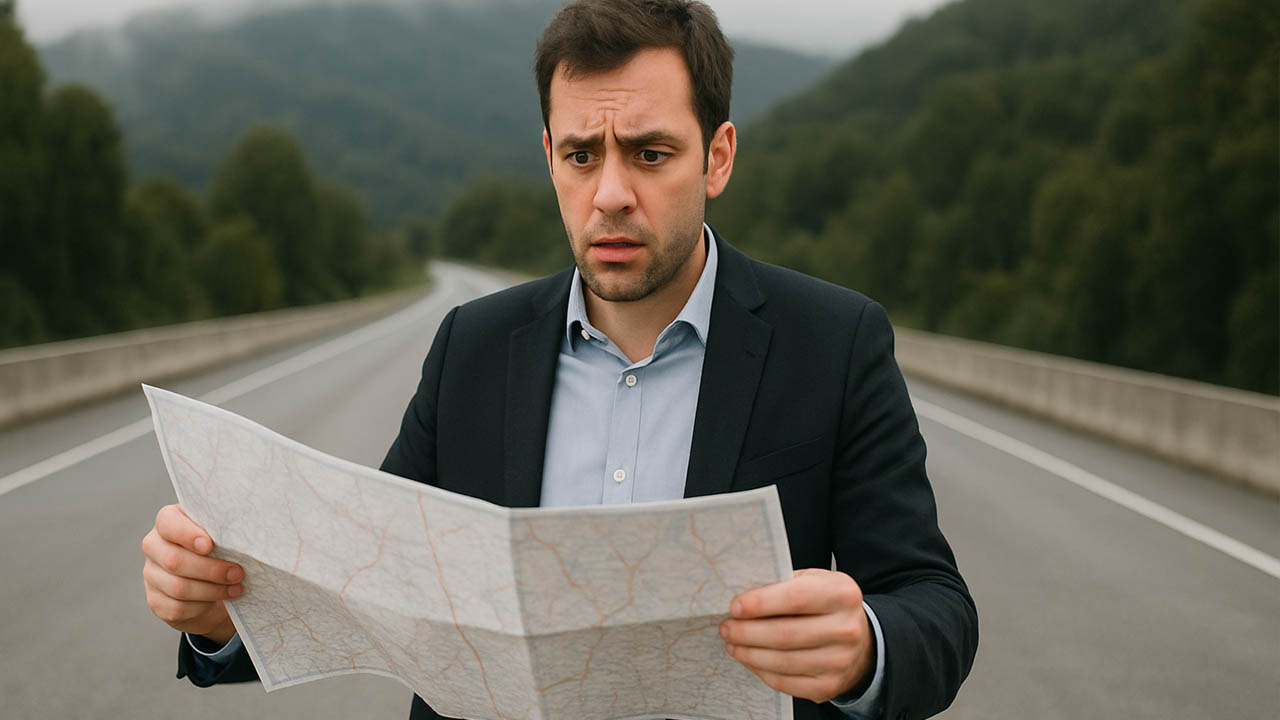



Picture this: It’s the early 1990s. You’re planning a cross-country road trip. You pull out a paper map, trace your route with a highlighter, and hope you picked the fastest path. There’s no GPS, no live traffic updates, and no easy way to adjust if something changes.
That’s how outbound used to work.
You built a list of companies you thought might be a good fit. You didn’t know if they were interested in your services, were ready to buy, or even knew you existed. But you sent cold emails, made cold calls, and hoped enough outreach would eventually pay off.
At the time, that approach made sense. Access to accurate prospect contact data was limited. Tools like targeted LinkedIn advertising didn’t exist. Website visitor tracking and social selling weren’t even options. Outbound was a numbers game based on guesswork.
Today, things are different.
We no longer rely on old paper maps. We have GPS, and with advances in AI, we can operate like autonomous vehicles.
Modern outbound uses real-time data to guide every move. You can track who’s visiting your website, engaging with your emails, interacting on social media, and registering for your events. You can build targeted lists based on real buying signals, not wishful thinking.
You can also create thought leadership content that addresses your audience’s actual challenges—and deliver it through platforms like LinkedIn with pinpoint accuracy.
Outbound isn’t about guessing anymore. It’s about listening to what the market is telling you—and responding to the right prospect at exactly the right moment with teh right message.
If your growth strategy still relies on hope and highlighters, it’s time to upgrade. The firms that adapt to signal-driven outbound will be the ones leading the way.



Sign up now! Every Monday, get breaking news of recent CMO appointments, motivation to start your week positively, and innovative business development insights.
 Back